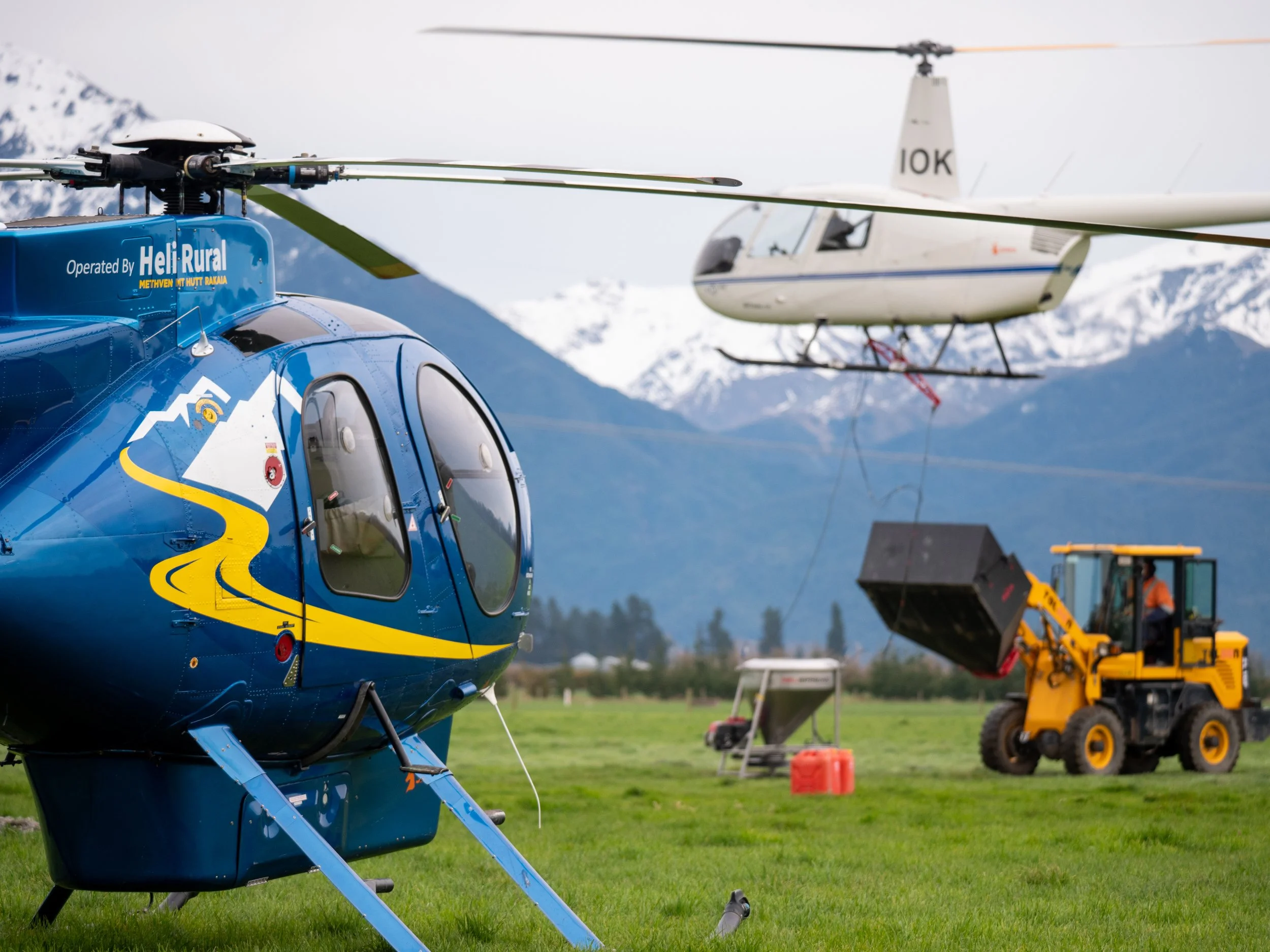
Why Helicopters Are a Game-Changer for Spreading Fertiliser
If you’ve ever wondered why helicopters are becoming the go-to choice for spreading fertiliser in New Zealand, you’re not alone. While trucks have been the traditional method, helicopters are proving to be a game-changer in the world of agriculture. Here’s why these airborne machines are soaring above their ground-based counterparts.
1. Quick and Efficient Coverage
Helicopters can cover a massive area in no time flat. When it comes to fertilising large fields, speed is crucial. Helicopters can get the job done quickly, ensuring that every corner of your paddock gets the nutrients it needs without the lengthy delays associated with trucks. This rapid application is a real advantage during those critical growth periods when timing is everything.
2. Reaching Those Hard-to-Get-To Spots
We all know how tricky New Zealand's varied terrain can be. From steep hills to boggy patches, trucks often struggle to reach certain areas. Helicopters, however, can easily navigate these challenging landscapes. They can fertilise the hard-to-reach spots without breaking a sweat, ensuring even the most difficult areas are covered.
3. No More Soil Compaction Woes
One of the big issues with trucks is soil compaction. The heavy weight of these vehicles can squish the soil, which isn’t great for root growth or drainage. Helicopters avoid this problem entirely since they don’t touch the ground. By flying over your fields, they help maintain the soil structure and keep things in tip-top shape.
4. Less Environmental Impact
Helicopters are also kinder to the environment. They avoid disturbing the soil and vegetation, which can help prevent erosion and preserve the natural beauty of your land. Plus, with precise application technology, helicopters reduce the risk of fertiliser runoff into waterways, keeping your farm and the surrounding environment healthier.
5. Precision and Accuracy
Today’s helicopters come with fancy tech like GPS and automated spreaders that make fertiliser application incredibly precise. This means you get an even spread every time, reducing waste and making sure your crops get exactly what they need. Trucks can’t always match this level of accuracy, especially when dealing with uneven terrain.
6. Flexibility and Speed
Need to adjust your fertiliser application schedule? Helicopters can adapt quickly to changes in weather or crop needs. They can be dispatched on short notice, which is super handy during peak times. Trucks, on the other hand, are more restricted by road access and weather conditions.
7. Cost-Effectiveness in the Long Run
At first glance, using helicopters might seem like a pricier option compared to trucks. However, their efficiency, ability to avoid soil damage, and the potential for higher crop yields can make them a cost-effective choice over time. The initial investment often pays off in increased productivity and reduced long-term costs.
Wrap-Up So there you have it – helicopters are proving to be an excellent choice for spreading fertiliser. They offer speed, efficiency, and the ability to tackle tough terrains, all while keeping soil and environmental impact in check. If you’re looking for a modern, effective way to manage your fertiliser application, it might just be time to look up and consider the advantages of a helicopter.