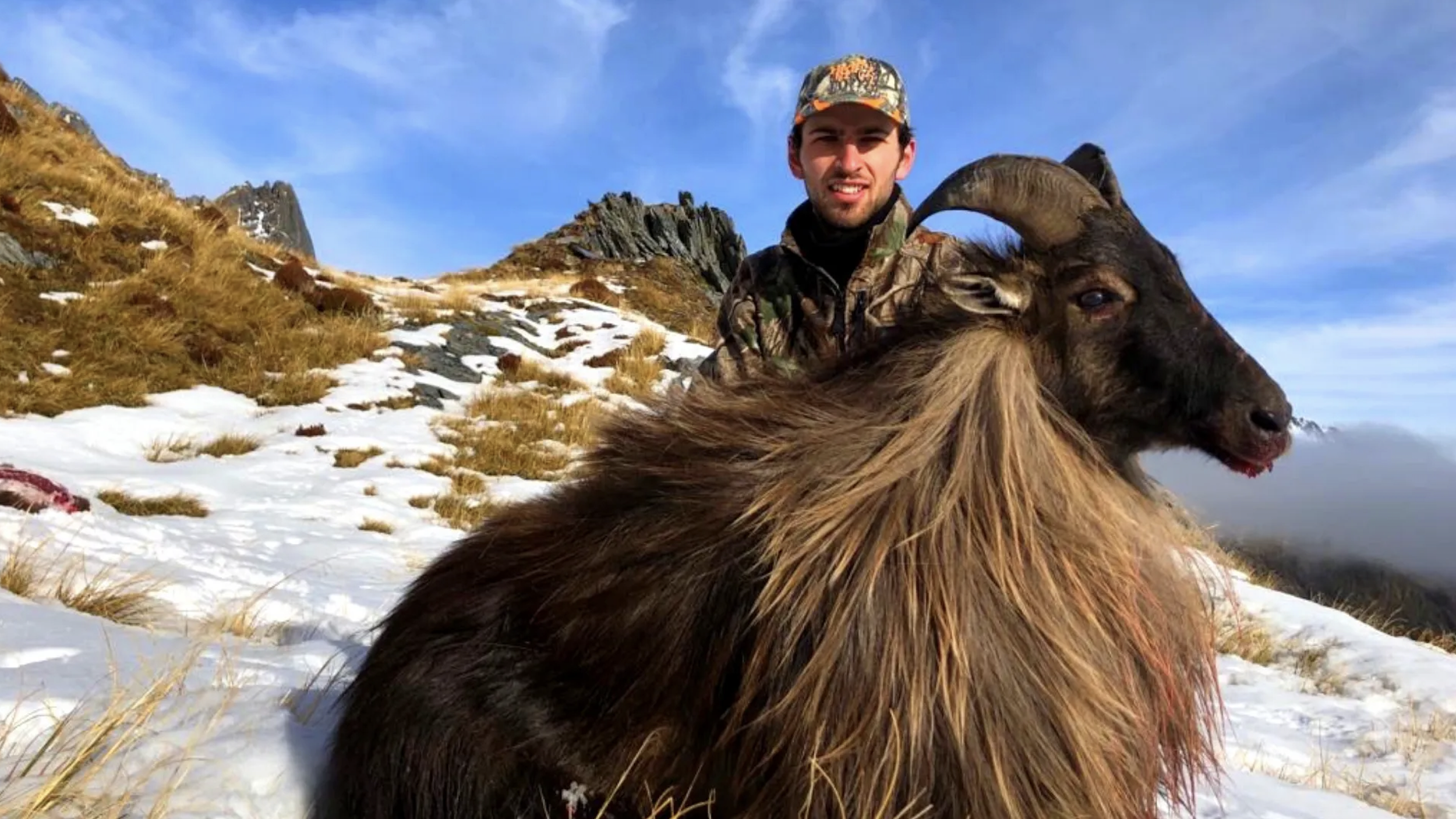
History of Himalayan Tahr in New Zealand
The arrival of Himalayan Tahr in New Zealand was first recorded in 1904. The story goes that the Duke of Bedford gifted six of the animals (three males and three females) to the New Zealand government to help with the future recreational hunting options for emigrating Englishman.
Five made the trip safely and were released near the Hermitage at Mt Cook and in 1909 a further eight were added from the duke’s herd.
They established themselves well with their status as a protected species to allow their numbers to grow reaching an estimated 100 ten years later.
By the 1950’s however, numbers had escalated to the point where even by the standards of the day, the environmental damage was considered too much.
The Mt Cook lily and snow tussock in the high altitude areas the Tahr lived were under threat and a culling programme was started.
While thousands were shot by ground-based hunters, the population really started to be managed with the introduction of helicopter shooting in the late 1960’s.
Estimates vary but by the early 1980’s some figures point to a 90% reduction in the population leaving approximately 2000 animals left.
Despite recreational hunting being permitted, Tahr numbers continued to grow and in 1993. The Himalayan Thar Control Plan 1993 (HTCP)was introduced which included the use of recreational and commercial hunters as well as the Department of Conservation (DOC) to help contribute to tahr control.
Fast forward to 2018 and controversy erupted with DOC unveiling a plan to cull Tahr in large numbers which had the potential to reduce the numbers of recreational hunters and, significantly, the amount of overseas hunters paying to hunt in what is considered to be the best place in the world to bag a trophy Tahr.
The issue is yet to be resolved.